


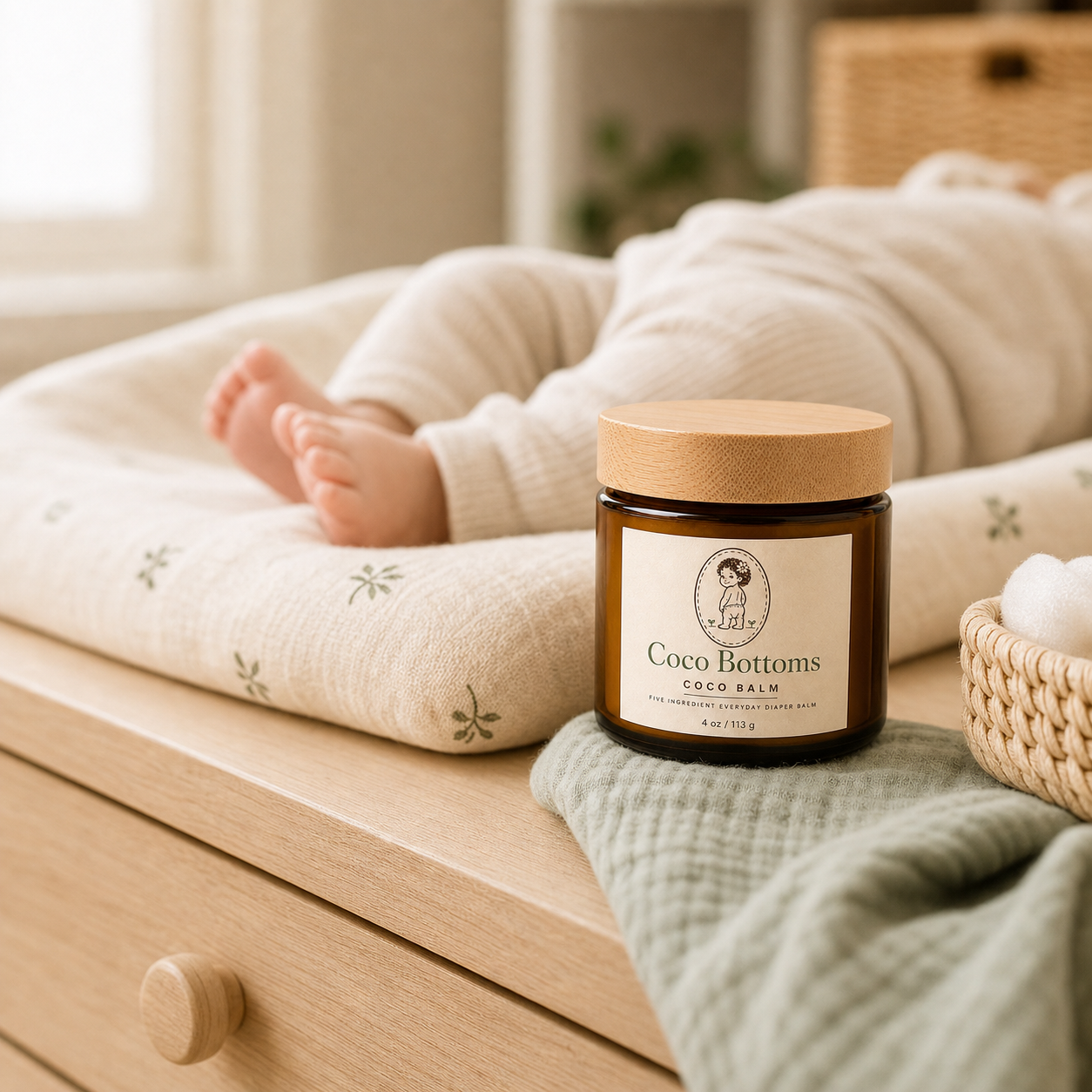
- PFASnon-detect
- Heavy metalsbelow FDA limits
- Lead + cadmiumtested every batch. No zinc oxide means no contamination pathway.
- Made in USAin small batches
Five ingredients
Most baby balms have 30. We have 5.
Every line on the ingredient panel is one you can pronounce. No petrolatum. No lanolin. No fragrance, including the "natural" kind. No essential oils. No preservative, because there's no water to preserve.

-
60-70%
Virgin coconut oil
Cocos nucifera oil
Cold-pressed. The hero. Softens, soothes, and carries the rest.
-
12-18%
Beeswax
Cera alba
Structure and a breathable barrier. Replaces petrolatum.
-
5-8%
Sunflower wax
Helianthus annuus cera
Heat-stable so the balm won't liquefy in a warm nursery.
-
8-12%
Jojoba oil
Simmondsia chinensis seed oil
Closest to skin's own sebum. Spreads warm, absorbs cleanly.
-
1%
Colloidal oatmeal
Avena sativa kernel flour
Skin-soothing. The one thing on the panel that asks for a comma.
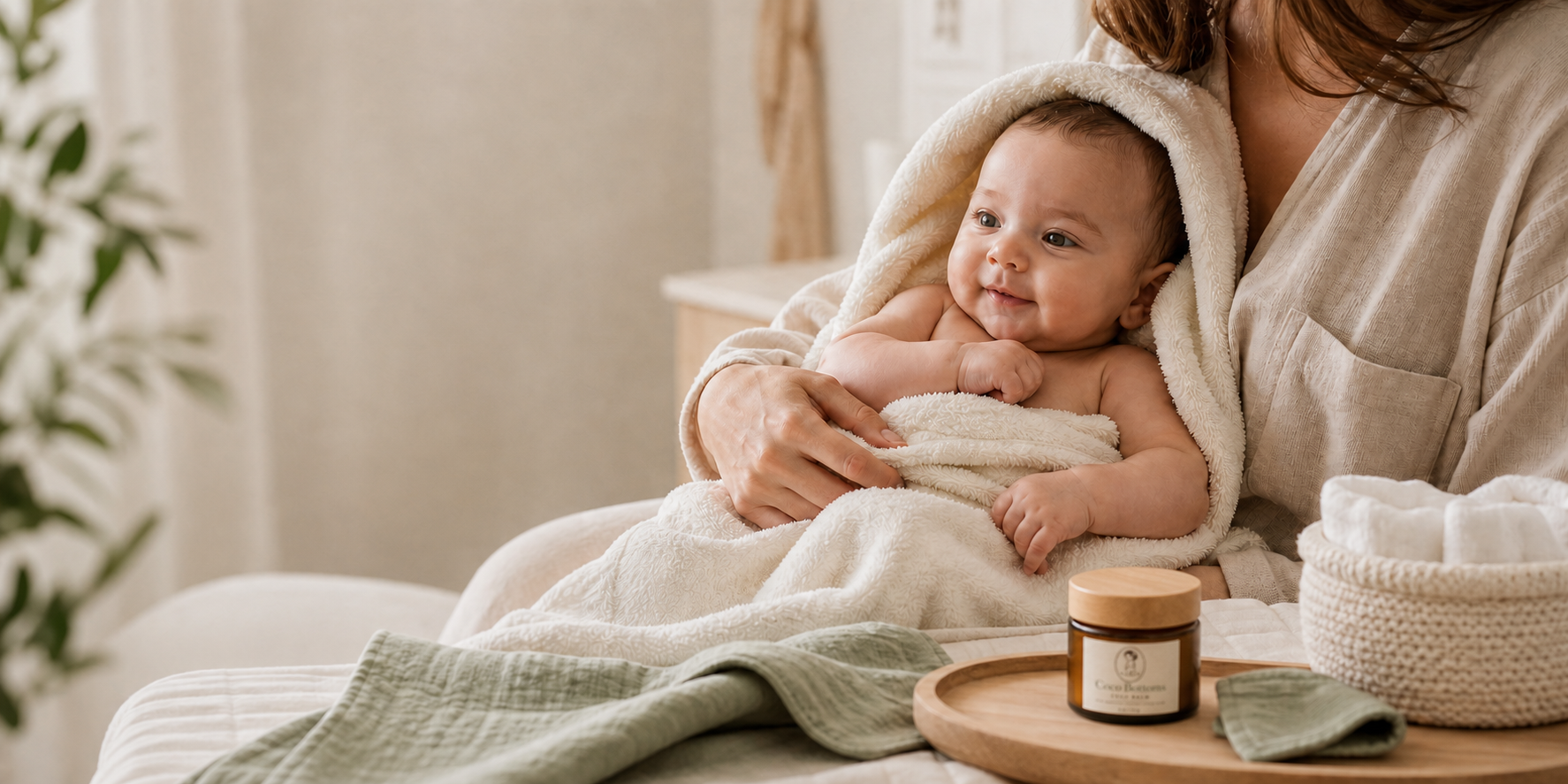
Glass, not plastic
Belongs on a shelf. Not in the recycling bin.
Coco Balm comes in a 4 oz amber glass jar with an untreated bamboo lid. Amber blocks UV. Glass doesn't leach. Bamboo composts. The jar is meant to be refilled, repurposed, or recycled, not landfilled after one squeeze.
- 4 oz amber glass
- Untreated bamboo lid
- Recyclable + refillable
- No mixed-material tube
How it compares
Where Coco Balm sits on the shelf.
Comparison reflects publicly listed INCI panels and retail pricing as of May 2026. Coco Balm is not a zinc-based rash treatment. For severe rash, see a pediatrician.

How it's made
A small jar with nothing to hide.
Every batch is mixed by hand, poured warm, and checked before it leaves the room.
-
Made in small batches.
A few hundred jars at a time, not pallets, not warehouses. The oil we pour today was pressed this season, not stored on a shelf for a year.
-
Poured warm, cooled slow.
The reason it melts on contact instead of dragging across skin. Rushed batches set hard. Ours don't.
-
Tested every batch.
Before a jar gets a label, we pull a sample for purity, texture, and melt point. The batch number is stamped on the bottom of your jar.
The everyday diaper balm
It works on you, too.
We made Coco Balm for the changing table. Then we kept finding it on the bathroom counter, the nightstand, in a coat pocket. People start sneaking it for themselves: elbows, cuticles, lips, the dry patch they've been ignoring since January. Five ingredients clean enough for a newborn, and the same jar handles everything else. It melts in warm, absorbs clean, leaves nothing behind. You'll know what we mean after the first use.
-
Baby
Diaper changes
A barrier layer for everyday redness and the post-bath ritual.
-
Baby
Cradle cap + dry patches
Warm a fingertip and work it in slowly. Reapply as needed.
-
You
Hands, cuticles, lips
The same five ingredients you trust on your baby's skin.
-
You
Anywhere skin is tight
Elbows, heels, the spot on your jaw where the mask sits. A little goes a long way.
From the founder
I became a parent and did what every new parent does: flipped over every product, squinted at the ingredient list, and felt vaguely lied to. Every baby balm was either a 30-ingredient mystery, a petrolatum tube from 1987, or a $40 boutique buy with no explanation of what was in it or why.
I wanted one jar I understood completely. Five ingredients I could look up. Glass instead of plastic. That was it. The beauty is in the simplicity.
- Ben founder, Coco Bottoms
Read the full story →Quick answers
Does it have zinc oxide?
No. Coco Balm is a coconut balm, not a rash treatment. For severe diaper rash, see a pediatrician and pick up a zinc cream from the drugstore.
Is it cloth-diaper safe?
Yes. Zinc-free means no staining on cloth diapers.
Coco Balm vs. Coterie Bun Balm?
Same ingredient philosophy. Ours comes in amber glass instead of a plastic tube, with a bamboo lid, at $32 instead of $40.
Coco Balm vs. HealthyBaby Baby Balm?
Same premium-clean philosophy. Ours has five ingredients to their ten, comes in amber glass instead of a plastic tube, and is third-party tested for lead and cadmium on every production batch. Not just at formulation.
Can I use this on myself?
That's the point. The same five ingredients clean enough for your baby's skin work on adult hands, lips, and cuticles.
How long does a jar last?
Six to ten weeks if you use it on diaper changes only. Longer for spot use.
Why no applicator?
Most jar-balm parents prefer their fingers. The balm warms in your hand and spreads more evenly that way. If you'd rather not double-dip on an active rash, a silicone applicator is on our roadmap.
One jar. Five ingredients. Everywhere your baby is soft.
6-10 weeks of diaper changes per jar. Free shipping on orders $50+. 30-day open-jar return.
Parent reviews
Parents are reaching for Coco Balm every day.
The reviews are simple: parents want a balm that feels clean, spreads easily, and belongs at every diaper change.